
 Check the game on BoardGameGeek
 Check the game on Ludopedia
Behind the design process
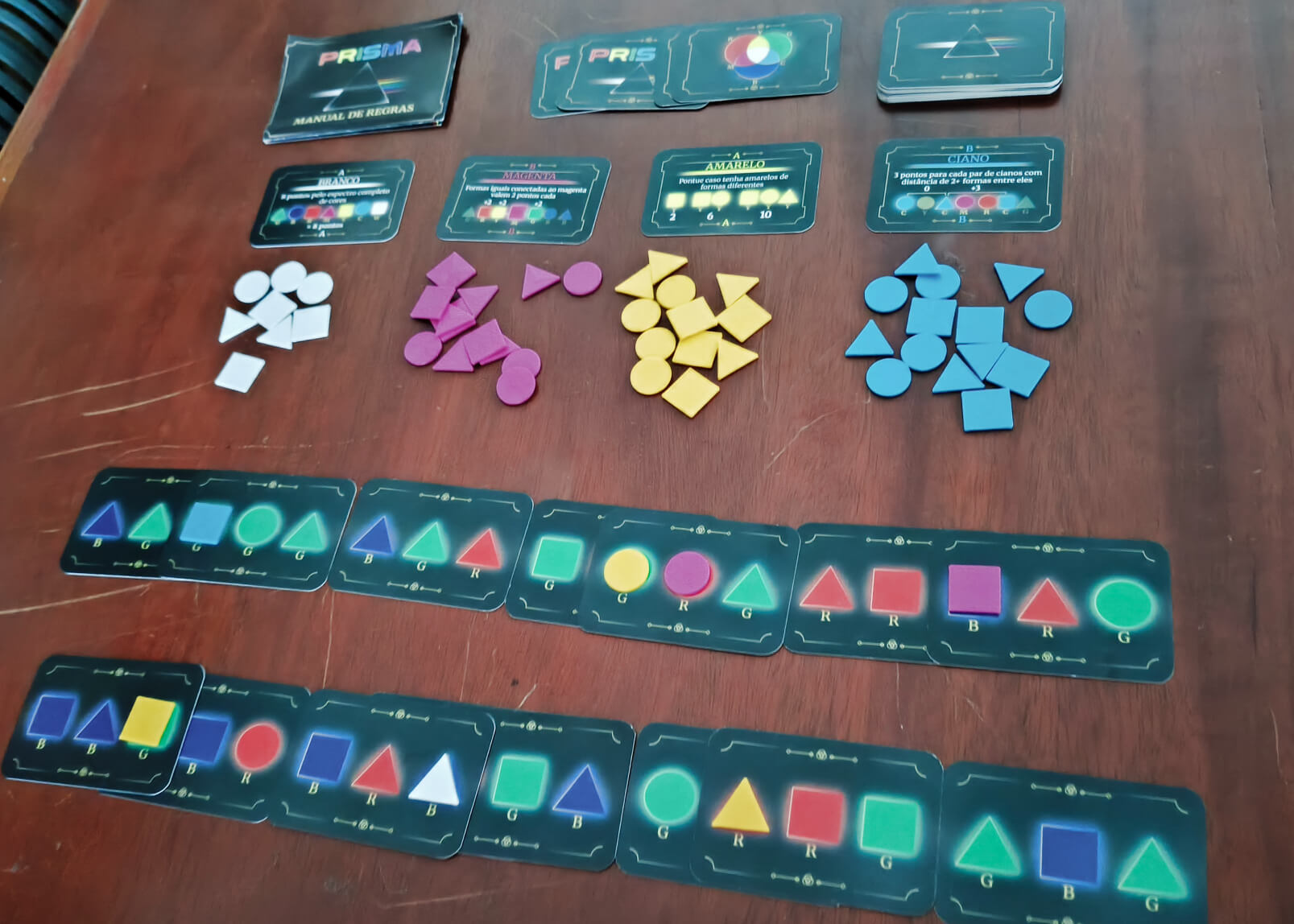
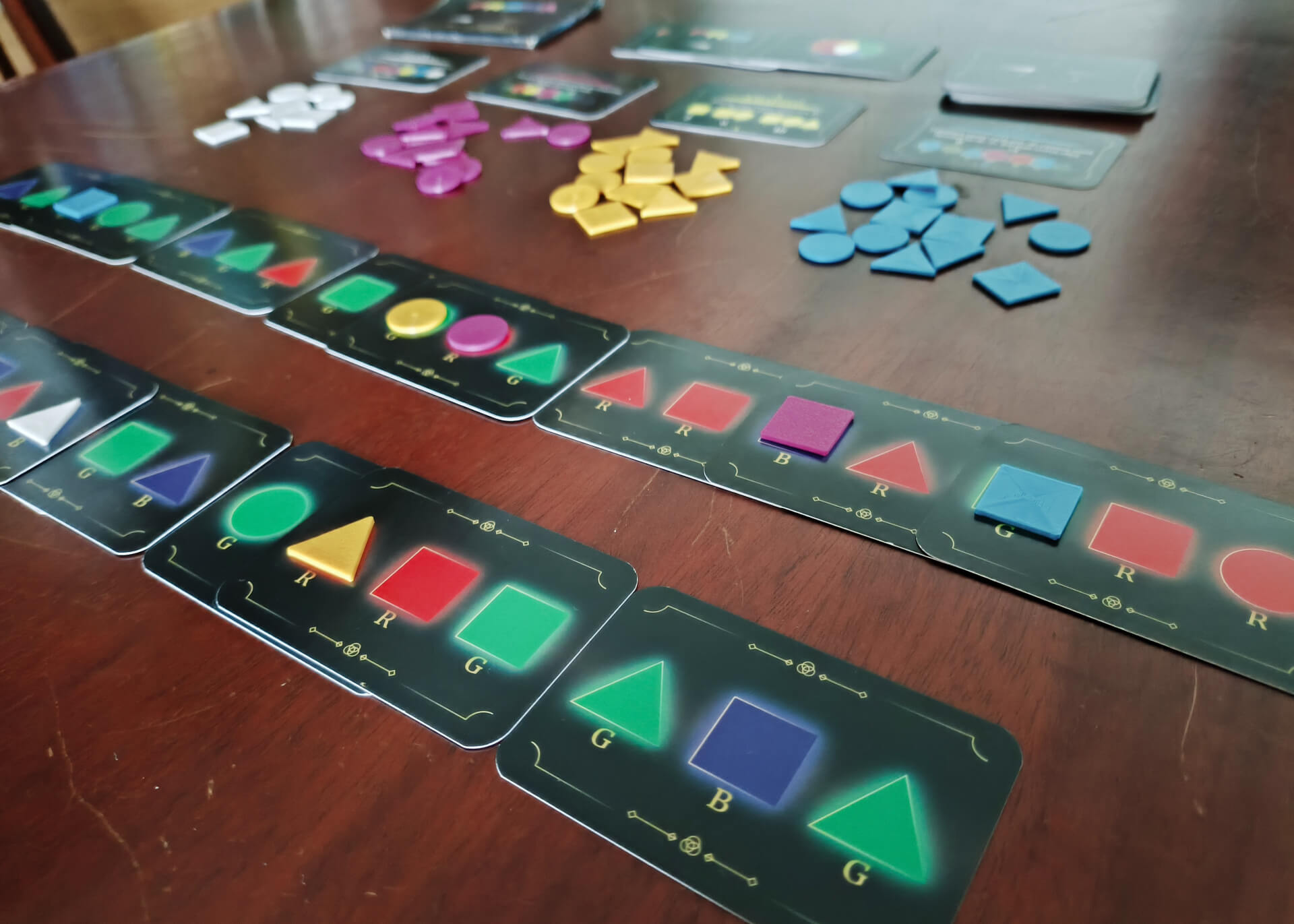
This game was actually created as a final project for a game design class in 2025, offered by the state-funded CULTSP PRO. The theme was "Music & Theatre", but although I love a good musical myself, Mini and Guilherme (my co-designers and teammates) weren't that excited. Then, with enough brainstorm, we created "EDM: Electronic Draft Music", a card game themed around DJs doing their own mixes to a big festival. It was praised on class, and I knew the design could go further.
Then, I presented to Maik Lebarck, founder of EducaMeeple, an indie educational Brazilian game publisher. He loved the puzzle and concept and suggested swapping the theme to optical color mixing instead of songs, probably because of the neon shapes on our prototype. Now as our 4th co-designer, we implemented together a new set of rules and Prisma became one of the EducaMeeple's more unique titles.