The Case of the Worst Day Ever
Ordinary stories, not-so-cozy puzzles
"Fill-in-the-blank" became a staple on mystery and detective games in recent years. In a way, it's a simple but effective interaction to ask the player if they really solved the puzzle when still giving it a little bit of help. Sometimes, you are completing a data structure - like Obra Dinn's notebook or Roottrees' family tree - but you can just fill in paragraphs about the plot. Probably not the first to do so, but the Golden Idol series is probably the responsible for popularizing the "retelling" gameplay.
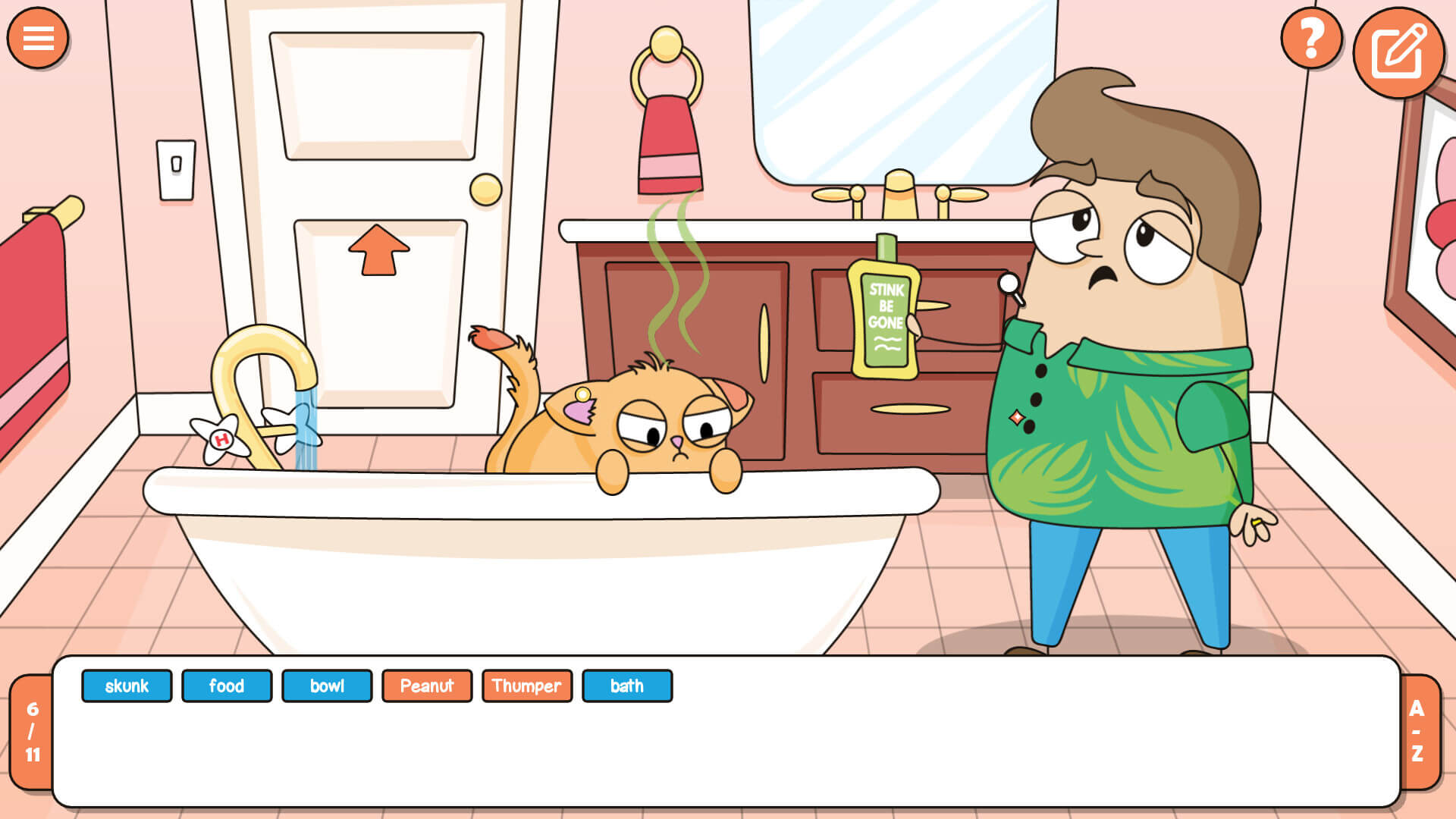
When I saw The Case of the Worst Day Ever for the first time, the comparison with Golden Idol was obvious and interesting: it looked like the same gameplay, but instead of magical objects killing people, your quest is to understand what happened on a bad day of an ordinary family. And, to be fair, the atmosphere of the game is really that, and when I've realized, I was two hours in trying to understood how a teenage break-up shaked up the whole school that day, and it was really funny to be a "detective" on those type of cases.
My main problem with the game was with the puzzle philosophy that it presents to you after the first 2 or 3 cases because the atmosphere can be cozy, but the challenge is totally not. Instead of being based on a continous narrative, every person had their own separated thing happening that day, and besides some text messages shared between levels, there's no knowledge you can bring from a stage to another. Every new "investigation" is a blank slate, on a new environment, with new characters and set pieces, what's not wrong by itself, but it does not help on the complexity level for each case.
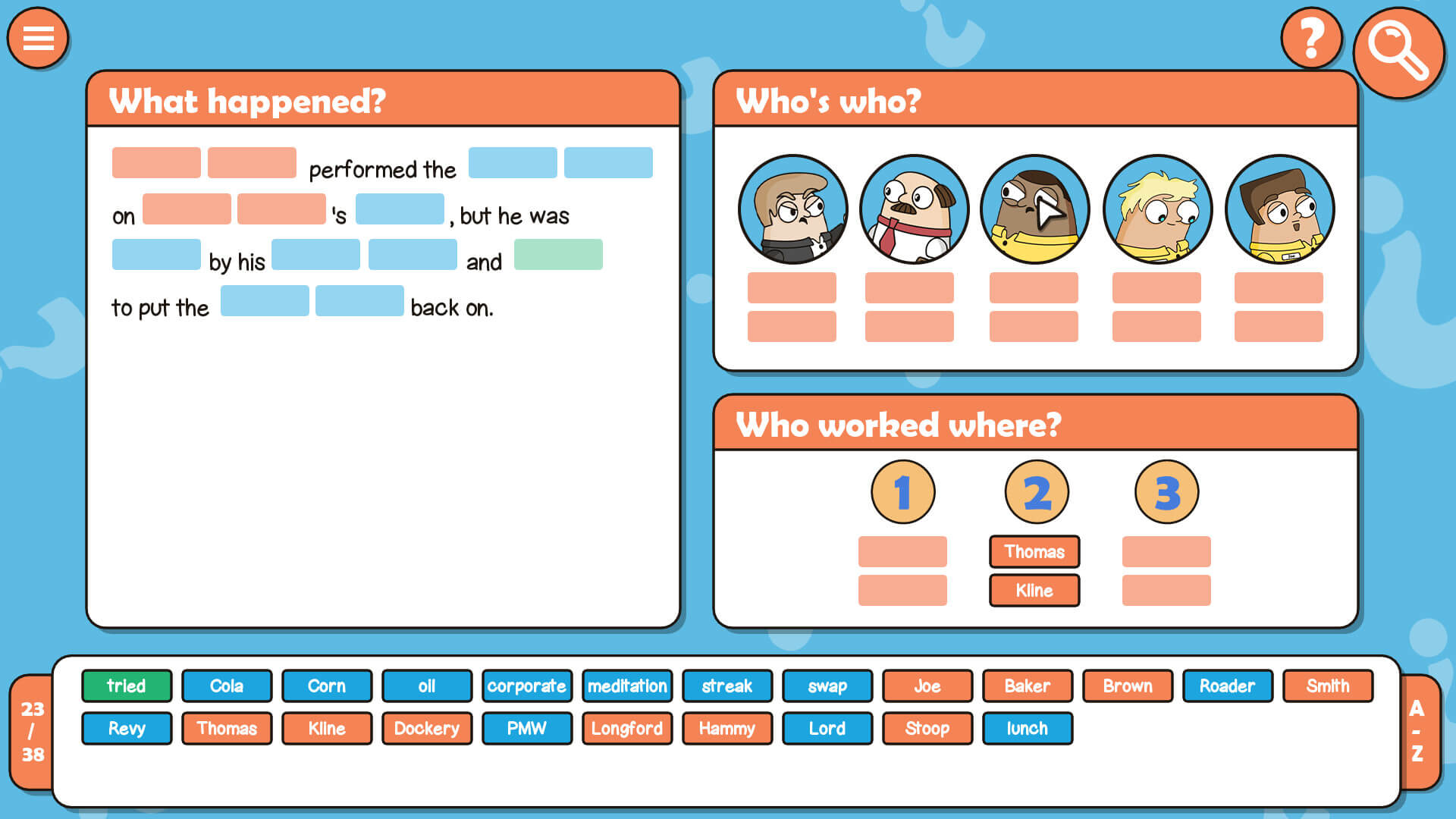
On other games of the genre, you have a hard-to-complete paragraph to fill, and then other "extra" puzzles to solve that helps as a guide, like finding all the names of the people involved, for example. Those puzzles act as a "logic checkpoint": they are easier, but gives you direction to understand the scene and what's happening. After you finish them, you have enough context to look at the level again and really get the plot that is being told. It's a way of guiding you without giving you hints or answers.
The Case of the Worst Day Ever has the same elements, but their roles are... reversed? These name lists are the true challenge, but they also feels like a more obscure Logic Grid (or even a clue Sudoku). The amount of cross-references you must have to solve a name, trying to make logic jumps to get a conclusion, is insane when you realize you're trying to discover the name of the dog that poops strange, you know? And then, the "plot paragraph" is mostly an afterthought or just describes the scene - a lot of times, I knew what to fill immediately, but the game decided to obscure the names just because they can.
The atmosphere is nice, and I can see people that wiil like the challenge it proposes, but The Case of the Worst Day Ever wasn't for me. The philosophy behind the puzzles didn't sparked great moments and made me, strangely, feel overwhelmed and bored at the same time. I truly believe that good mystery games doesn't need to kill someone to be interesting, but I think there's probably better ways of making me discover the gossip of a bad day.